

MET Institute of Mass Media

PGP MCMM – Cinematic Storytelling (AI-Integrated)
For admissions call
PGP in Mass Communication & Media Management (PGP MCMM) – Cinematic Storytelling (AI-Integrated)
(Best Filmmaking & Cinematic Storytelling Course in Mumbai, India)
The Post Graduate Programme in Mass Communication & Media Management – Cinematic Storytelling (AI-Integrated) is an intensive 18-month postgraduate programme in Mumbai designed for aspiring filmmakers, creators, and visual storytellers who want to shape the future of cinema and digital storytelling.
In today’s world—where cinema blends seamlessly with digital ecosystems, AI-enhanced creative workflows, and multi-platform content consumption—this specialization prepares students with the creative, technical, and managerial expertise needed to excel across film, OTT, branded content, advertising, digital entertainment, and emerging narrative formats.
This is where classical filmmaking foundations meet next-gen innovation. Scripts are developed with AI, edits are enhanced using intelligent tools, and visuals come alive through immersive production technologies. Here, students don’t just learn filmmaking—they learn the future of it.
The Cinematic Storytelling (AI-Integrated) specialization blends filmmaking craft, digital production techniques, AI-powered creativity, and media management. Students explore the complete spectrum of visual storytelling—from concept to screen—while mastering the tools and technologies shaping tomorrow’s cinematic experiences.
Through hands-on production, studio workshops, on-ground shoots, and industry collaborations, learners build a professional portfolio across:
- Fiction & narrative films
- Documentaries
- Branded content
- Advertising films
- Digital shorts
- Social-first storytelling
- OTT-ready narratives
Why Choose PGP MCMM – Cinematic Storytelling (AI-Integrated)?
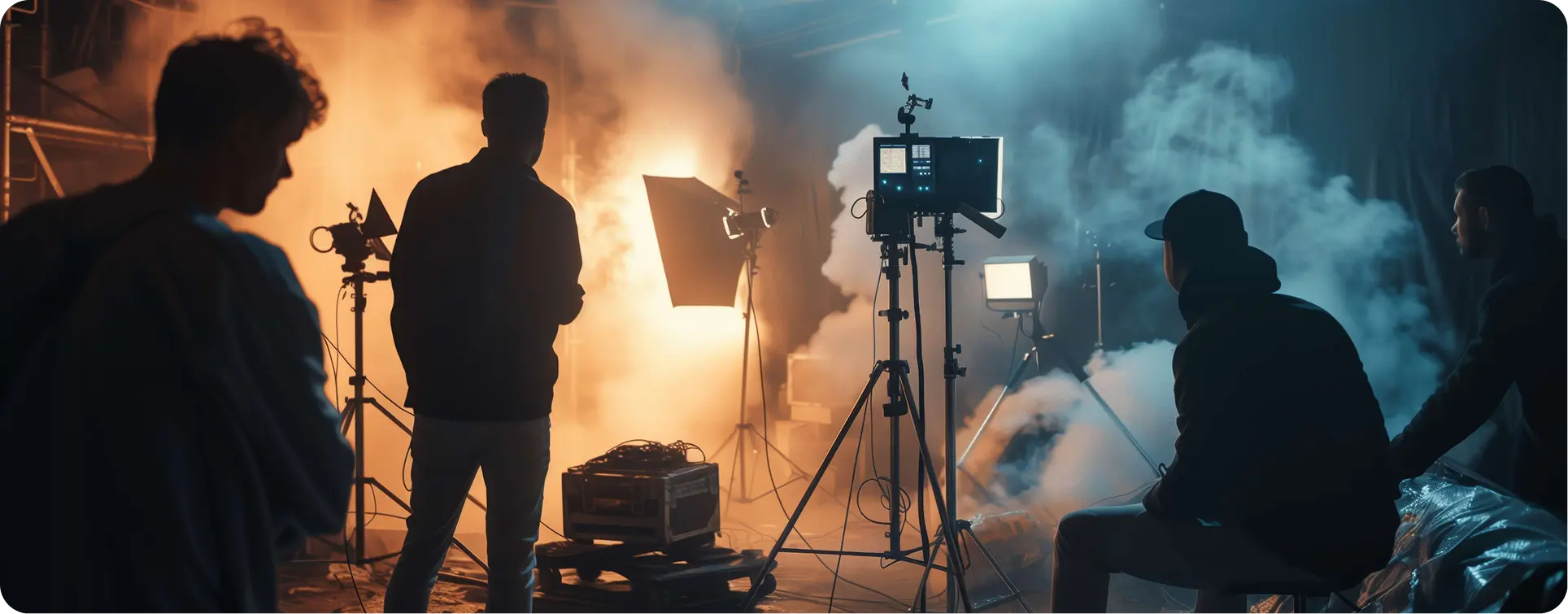
The programme offers a studio-based curriculum where students learn through real shoots, hands-on editing, and production lab sessions. AI-integrated tools are used across every stage of filmmaking—pre-production, production, and post-production—ensuring learners are equipped for the future of cinematic content creation.
Students benefit from masterclasses conducted by filmmakers, cinematographers, editors, and OTT professionals, along with live projects and short films that are evaluated by industry mentors. The learning journey provides complete filmmaking exposure, covering everything from scripting and shooting to editing and showcasing the final film.
Students of the Cinematic Storytelling (AI-Integrated) specialisation work hands-on with the industry’s most advanced creative and production tools. They learn professional film editing software such as Adobe Premiere Pro, DaVinci Resolve, and Final Cut Pro, along with After Effects, Blender, and Unreal Engine for motion graphics, VFX, virtual production, and 3D visualisation. Audio design and mixing are taught using Adobe Audition, Pro Tools, and Reaper, strengthening sound aesthetics for film and OTT content. Learners also explore colour grading workflows, mastering DaVinci Resolve’s high-end grading suite used by global post-production houses.
To build future-proof creators, the programme integrates AI-powered filmmaking tools such as Runway Gen-2, Pika Labs, Midjourney, Kaiber, and script-enhancement platforms like ChatGPT and Sudowrite. Students experiment with AI-assisted pre-visualisation, shot design, moodboarding, casting simulations, and intelligent editing assistants like Adobe Sensei, Davinci Neural Engine, Topaz AI, and Descript for speech-to-video automation. They also work with virtual production pipelines using Unreal Engine, motion capture tools, and volumetric capture for next-gen cinematic experiences.
By the end of the programme, learners are fluent in both traditional filmmaking craft and next-gen intelligent workflows, empowering them to create films, OTT content, branded stories, and immersive visual narratives at a professional level.
What You Will Learn
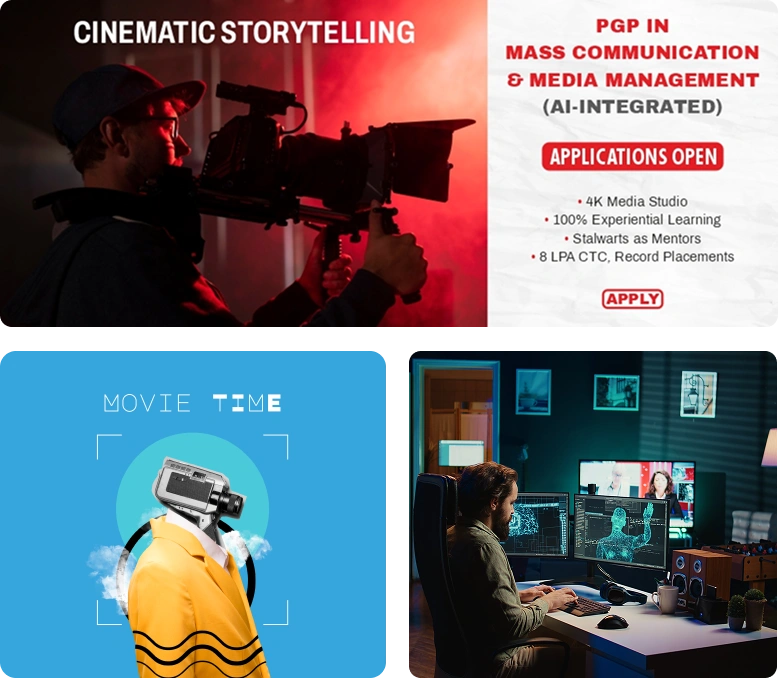
Students start with the Foundations of Filmmaking, covering scriptwriting, cinematography, visual design, direction for films and OTT, and core production planning.
They then explore AI-Powered Creative Workflows, using generative AI for scripting and ideation, AI-assisted editing, colour grading, VFX, sound design, and automated production pipelines.
In Cinematic Language & Visual Aesthetics, learners study storyboarding, film grammar, shot composition, visual psychology, and techniques for emotional and genre-based storytelling.
The Digital Production & Post-Production module trains students in multi-camera setups, digital cinematography, studio production, editing, sound engineering, VFX workflows, and OTT-ready formats.
Finally, Content Strategy & Media Management teaches audience behaviour, platform-specific storytelling, content ecosystems, budgeting, pitching, project management, and legal/business aspects of content creation.


Programme Overview
The PGP MCMM – Cinematic Storytelling (AI-Integrated) is a professional-level postgraduate programme consisting of 6 Trimesters with an industry internship, delivered over 18 months at MET Institute of Mass Media, Mumbai.
Career Opportunities
Career Opportunities pursue high-growth careers across cinema, OTT, advertising, digital media, and entertainment. Roles include filmmaker or film director, cinematographer, film/OTT/digital editor, scriptwriter or screenplay writer, assistant director or production lead, creative producer, visual storyteller, AI-assisted film editor, digital video producer, branded content creator, promo or trailer editor, storyboard artist, and short-form video director.

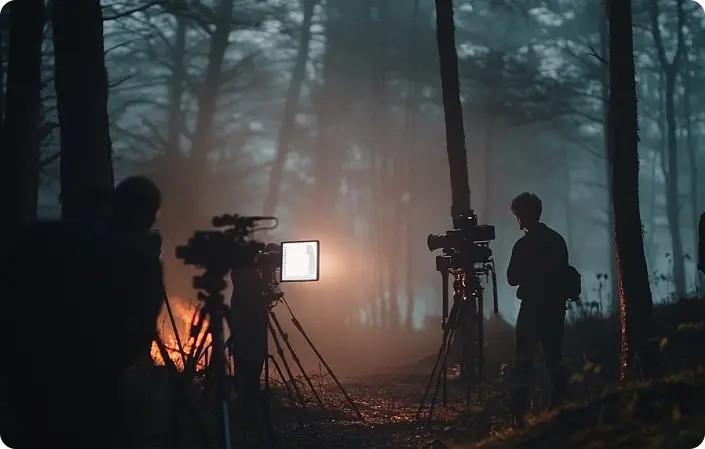
Program Highlights:
- Film & Digital Production Studios
- MET Media Collective: Mumbai's First Ever Campus Media Agency
- AI-Enhanced Editing + VFX Labs
- Scriptwriting & Direction Mastery
- Camera & Lighting Immersive Workshops
- Short Film Festival Showcase
- Guest Sessions by OTT & Film Industry Experts
- Internship & Placement Support
SYLLABUS
- Media, Marketing & Brand Fundamentals
- Storytelling, Content Writing & Communication
- Media Research, Ethics & Laws
- Media Ecosystem & Business Platforms
- Digital & Media Technologies
- AI for Media
- VFX / SFX, AR / VR Foundation Course
- Foundation of Visual Design
- Event Management (Metamorphosis)
- Integrated Marketing Communication (IMC)
- Digital Strategy & Platform Ecosystems
- Media Planning & Buying
- Content Creation & Impact-driven Stories
- Advance Strategy
- Internship (Full Trimester)
- Media Entrepreneurship
- Cinematic Storytelling (AI-Integrated) - Foundation
- Advanced AI & Innovation Lab
- Advanced Visual Design
- Advanced Screenwriting & Narrative Design
- Film Direction, Production & Visual Language
- Post-Production, Editing & Sound Design
- Film Marketing, Distribution & OTT Business
The Sharpening Process is the phase where students refine everything they’ve learned—writing, directing, visual design, production, editing, pitching, and creative decision-making. Through workshops, reshoots, script rewrites, feedback sessions, AI-assisted refinements, and hands-on cinematic exercises, students sharpen both creative and technical skills. This stage transforms them into confident storytellers capable of handling real-world filmmaking challenges.
- Conducive Learning Environment: To make the classroom a place where students can learn by being curious, creative, and innovative. This will encourage them to explore, experiment, and do well in their chosen media fields.
- Professional Development: To help students gain, organize, and use domain-specific knowledge so they can confidently and competently handle real-world media problems.
- Core Competency: To learn how to plan, create, and carry out integrated, transmedia communication campaigns through hands-on, portfolio-based learning and projects that are relevant to the industry.
- Technical Skills: To give students hands-on experience with AI, new media technologies, digital tools, and creative platforms that are necessary for making effective, data-driven media campaigns.
- Corporate Life Skills and Values: To teach professional ethics, leadership skills, and the ability to make strategic decisions that support overall growth, long-term success, and social responsibility.
- Experiential Learning at the Core: Learning by doing through real projects, campaigns, and industry briefs that connect theory with practice.
- Portfolio-Based Projects: Students create strong professional portfolios that show off their creativity, technical skills, and ability to think strategically.
- MET Media Collective: is Mumbai's first student-run campus media agency. It gives students real-world experience by having them work on live brand projects, interact with clients, and carry out campaigns.
- Industry-Driven Curriculum: Created with input from top media professionals to keep up with new technologies and trends.
- Mentorship from Experts: Senior industry leaders and alumni give hands-on help, career advice, and a look at the real world.
- Hands-On Experience: Making showreels, working on live projects, and doing case studies that improve both creative and management skills.
- Strategic Learning & Life Lessons: Programs, workshops, and simulations on campus that help students develop their emotional intelligence, ethics, and resilience.
- Global Perspective: Giving students access to international certifications, tools, and methods to help them stay competitive around the world.
- Campus-to-Corporate Transition: MET's "Growth Mindset" program helps students become confident, future-ready media professionals by helping them grow and learn.
Students will be able to do the following by the end of the PGP MCMM program:
- Apply Knowledge: Students can showcase they have deep understanding of media, marketing, and communication theories by using them in real-world situations in the industry.
- Think Critically and Creatively: Students can look at problems, figure out what the audience needs, and come up with new, ethical, and culturally appropriate media solutions.
- Use New Technologies: Students can use AI, data analytics, and digital tools to improve storytelling, campaign performance, and audience engagement.
- Communicate Well: Students can create messages that persuade and communicate in a way that has an effect on a wide range of platforms and audiences.
- Lead and Collaborate: Students can work well in teams with people from different fields by showing leadership, flexibility, and emotional intelligence.
- Students show Professional Ethics: Follow media laws, ethical guidelines, and social responsibility in all forms of communication.
- Manage and Innovate: Students can use strategic, data-driven, and creative methods to plan, carry out, and evaluate media campaigns in order to get measurable results.
- Lifelong Learning: Students build a knack of learning new things and improving their skills as media technologies and global business trends change.


