Six Days ATAL FDP by MET IOM
2024-09-16
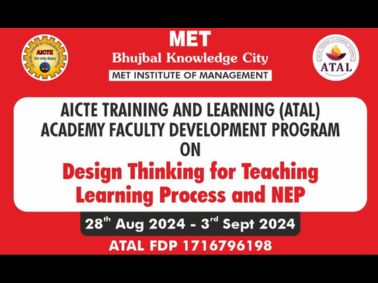
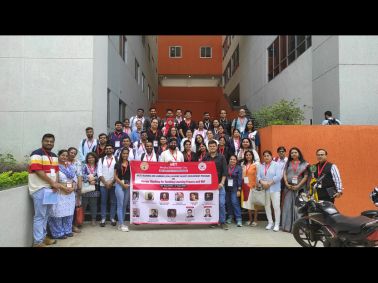
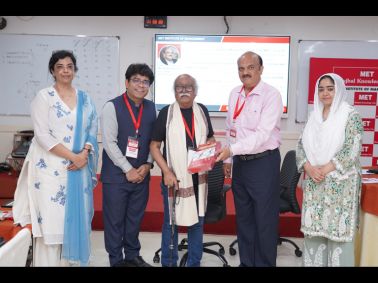
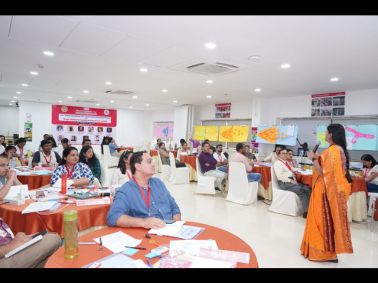
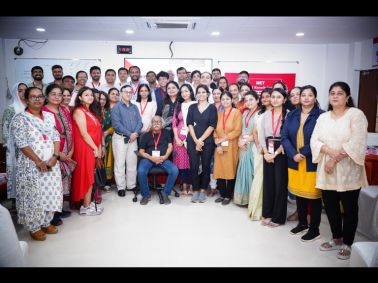
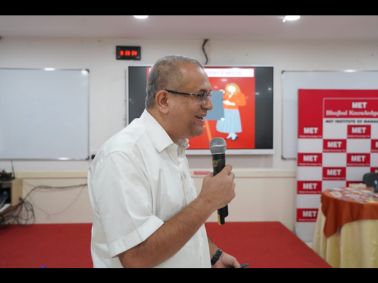
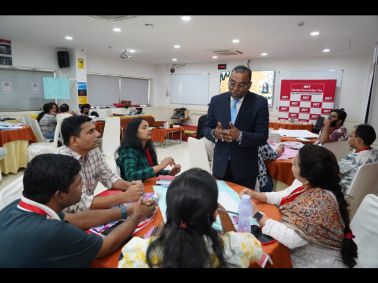
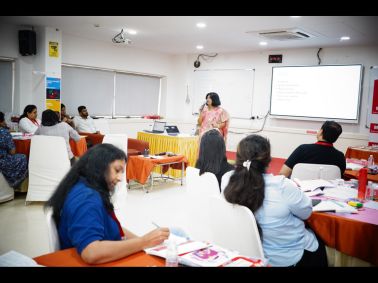
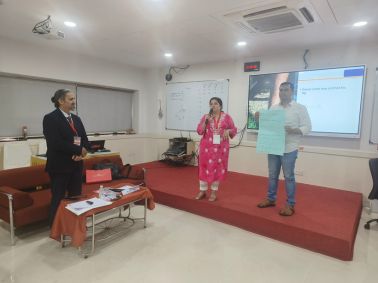
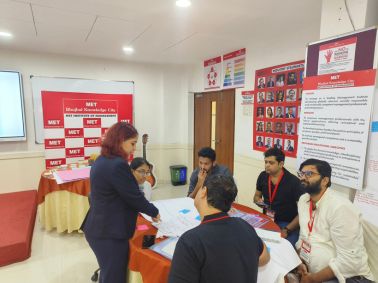
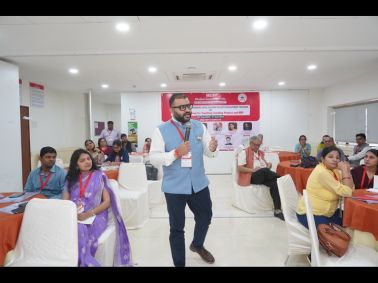
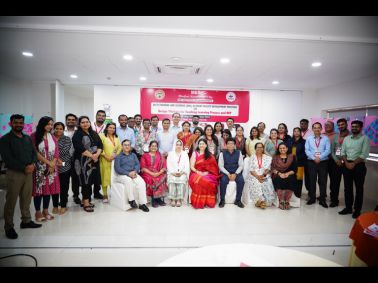
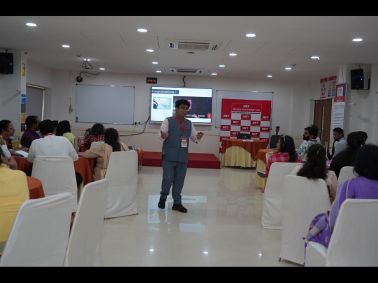
MET Institute of Management successfully conducted Six-days ATAL-FDP program from 28th August – 3rd September on ‘Design Thinking for Teaching Learning Process and National Education Policy (NEP)’ that focused on equipping faculty members with the tools to create effective pedagogical tools aligned with the National Education Policy (NEP). Mr. Pankaj Bhujbal, Hon. Trustee, MET encouraged participants to refine their prototype and implement it in the classroom. The program was led by Dr. Swati Lodha, Director, MET IOM, she emphasized the transformative potential of design thinking in education and guided participants through key stages of the design thinking process, including empathy, define, ideate, prototype, test and implement.
Among the distinguished guests were Mr. Umesh Rathod, Manager, IP & Technology Transfer, Indovation Centre, Western Region, who emphasized the importance of producing affordable and best products. Dr. Manmeet Barve, Associate Professor, MET IOM, discussed the key qualities of a design thinker and guided participants through the design thinking process. Mr. R.K Lawande, Founder, E4 Development Coaching Ltd., shared his insights on integrating design thinking principles into curriculum design to align with the NEP.
Other notable guests included Dr. Vinay Prabhu, Author and Ex-HOD Psychology, he stressed the significance of understanding students to tailor effective educational experiences, Ms. Manisha Phadke, Design Consultant and Educator; she highlighted the transformative power of design thinking in education and the importance of innovative learning strategies. Dr. Jimmy Jain, Forbes Contributor and Founder of SDTP, Square Sequel Consulting; focused on the user-centered approach and cautioned against the pitfalls of transference, Dr. Chitra Wadke, Associate Professor, MET PGDM; she advocated for the use of large group strategies and collaborative learning to enhance student engagement, Ms. Zoya Natterwala, AVP – Customer Experience & Design Thinking Master Practitioner, Square Sequel Consulting, she introduced the concept of HMW (How Might We) thinking and provided feedback on participant prototypes; Mr. Arvind Mishra, Senior Associate Consultant, Square Sequel Consulting; he emphasized the importance of effective storytelling and communication in design thinking.
Prof. Sudhakar Nadkarni, Guru of Design in India, advocated for students to understand the perspectives of both designers and users and emphasized the power of design thinking as a tool for gaining insights. Ms. Shilpa Vohra, Promoter Director, Marind Finvest, highlighted the leadership challenges in implementing innovative pedagogy and highlighted the importance of creating a supportive environment for teachers.
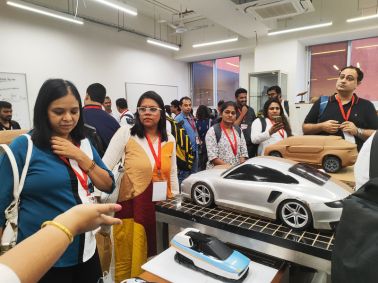
The program featured a field visit to IIT Bombay\'s Industrial Design Centre (IDC), where the participants witnessed first-hand the various prototyping facilities at the IDC, including the 3D printing process, Clay Styling Studio, Bamboo Laboratory, Metal Studio, Wood Studio, Plastic Studio, and Ceramic Studio. This hands-on experience provided valuable insights into the entire prototyping process, from ideation to final product development.
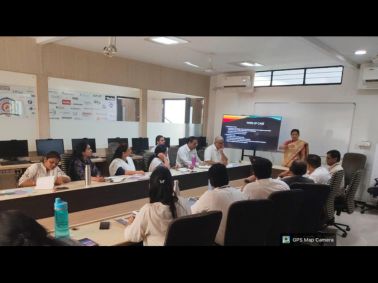
The ATAL-FDP concluded with a showcase of innovative prototypes developed by the participants. These prototypes were assessed by a panel of experts and demonstrated the potential for transformative teaching and learning practices. Overall, the program was a valuable experience for the participants and has the potential to significantly impact the future of education.
Related Workshop
Aaroham Session with Ms. Jaya Row
2025-09-30
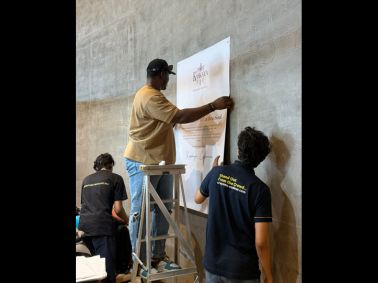
As part of Aarohan Launchpad 2025, MET Institute of Management organized a motivational session for the newly inducted students of MMS 2025-27, conducted by Ms. Jaya Row, Author, Independent Professional Training & Coaching Professional, with over four decades of corporate experience and extensive research in Indian philosophy on 26th September 2025.
In her address, Ms. Row inspired the students to begin their academic journey with focus and clarity. Drawing references from the legacy of the Marathas and Shivaji Maharaj, she highlighted the importance of courage, leadership, and resilience. She encouraged students to read the Bhagavad Gita as a timeless source of motivation and practical wisdom.
Emphasizing discipline and professional etiquette, Ms. Row advised the students to develop the habit of prompt responses to communication, akin to top management practices. She urged them not to dwell on the past or worry excessively about the future but to channel their energy into the present moment.
Through illustrations from the lives of eminent personalities, including tennis players and cricketers, she conveyed the significance of remaining calm under pressure. Her session left the young minds motivated, encouraging them to adopt focus, composure, and self-mastery as guiding principles in their management journey.
Health awareness workshop Thoda Gyaan, Thodi Muskaan
2025-09-30
In today’s fast-paced and demanding lifestyle, it is essential to be aware of simple yet effective ways to care for our health.
On 26th September 2025, the MET HR Department organized a special health awareness workshop \"Thoda Gyaan, Thodi Muskaan\", designed to guide staff on handling medical emergencies and adopting preventive measures for overall well-being.
The session was conducted by renowned physician Dr. Tushar Shah, who combined practical health tips with lighthearted humor, making learning both insightful and engaging.
Through such initiatives, MET continues to prioritize the holistic welfare of its community.
Workshop on Entrepreneurship and Innovation as a Career Opportunity
2025-09-20
MET Institute of Management’s Institute Innovation Council organized a workshop in collaboration with COTO on “Entrepreneurship and Innovation as a Career Opportunity.â€
The session was led by Ms. Aparna Acharekar, Co-founder of COTO, who engaged students in an interactive discussion on how innovation and entrepreneurial thinking can open up exciting career possibilities. She also emphasized why emotional wellness is essential for success, the stress factors faced by today’s youth, and practical strategies to build resilience and emotional intelligence in their professional journey.
The enthusiastic participation reflected students’ readiness to embrace holistic well-being alongside innovation and entrepreneurship. The workshop added a meaningful dimension to their learning, inspiring them to approach their academic and career paths with creativity, balance, and strength.
Two-day workshop under the AICTE – VAANI
2025-08-25
MET Institute of Management, in collaboration with AICTE and Observer Research Foundation (ORF), inaugurated the two-day workshop under the AICTE – VAANI (Vibrant Advocacy for Advancement and Nurturing of Indian Languages) Programme on “Blue Economy 360°: Innovation, Sustainability, and Collaboration in the Indian Ocean†(In Hindi).
The event commenced on August 11, 2025, with the traditional lighting of the lamp, marking the beginning of an insightful dialogue on the multifaceted dimensions of the Blue Economy, centred on innovation, sustainability, and regional collaboration.
In the inaugural address, Dr. Swati Lodha, Director, MET Institute of Management, welcomed the participants and emphasised the importance of integrating Hindi into discussions of national significance. She also encouraged attendees to explore student-created posters that showcased research on the Blue Economy.
Mr. Pankaj Bhujbal, Hon. Trustee, Mumbai Educational Trust, addressed the gathering with a warm welcome to participants and subject matter experts. He underscored the need to generate inclusive employment, promote innovation, and harness initiatives such as Sagarmala to unlock the vast potential of India’s maritime economy.
During the workshop Cmdr. Dr. Shrikant Kesnur, VSM (Retd), shared an inspiring talk on India’s rich maritime heritage. He called the ocean the “first version of the internet,†connecting civilisations from the Chola Empire to Vasco da Gama. Drawing parallels between the Blue Economy and a modern-day Samudramanthan, he explained how the ocean can yield innovation, sustainability, and global cooperation—but also carries inherent risks. His closing words left a mark: “Samudra Bharat hi Samruddh Bharat hai†— A maritime India is a prosperous India.
Ms. Rupa Naik, Director, World Trade Point Federation, Mumbai, brought urgency to the conversation, revealing that “Every minute, a garbage truck’s worth of waste is dumped into the ocean.†She asked, “Is this the Samudramanthan we aspire to?†Calling for responsible consumption, recycling, and plastic waste reduction, she reminded us: “Hind Mahanadi ki suraksha hamara kartavya hai†— Protecting the Indian Ocean is our duty.
The event featured distinguished speakers who provided valuable insights into India’s evolving maritime landscape.
Mr. Abhay Khare from the Jawaharlal Nehru Port Authority (JNPA) spoke on the Vessel Traffic Management System (VTMS), emphasizing the need to reduce vessel turnaround time to improve trade efficiency. He also discussed the roles of NSFT and NSOPT in cargo handling and highlighted JNPA’s distinction as India’s first Landlord Port, referencing a real-life case involving the vessel NSE Cilitoro.
Dr. Vijay Khare, Head of the Department of Defence and Strategic Studies at Savitribai Phule Pune University, delivered a thought-provoking session on the Blue Economy, focusing on economic development, livelihood generation, environmental sustainability, and ecosystem preservation.
Lt. Col. Gaurav Bali (SM Gallantry), Joint Director – Infrastructure, Indian Army, shared insights on innovation in coastal infrastructure. Drawing from his military background, he underscored the strategic significance of India\'s coastlines and the role of technology in strengthening maritime resilience. Quoting, “The more you sweat in peace, the less you bleed in war,†he emphasised the importance of preparedness.
On Day 2, discussions centred on reimagining Indian Ocean governance in light of the escalating climate emergency.
Ms. Aparna Roy, Fellow and Lead – Climate Change & Energy at ORF Kolkata, delivered an insightful address urging participants to rethink their relationship with the Indian Ocean, beginning with the question: “Why Blue?†She stressed that a robust blue economy must be built on economic, environmental, and cultural foundations — supporting coastal livelihoods, preserving biodiversity, and promoting low-carbon, innovation-driven development. Emphasising the interconnectedness of the Sustainable Development Goals (SDGs), Ms. Roy called for integrated action that aligns economic progress with ecological stewardship.
The sessions emphasised the urgent need for sustainable, inclusive, and innovation-led approaches to managing ocean resources, highlighting the role of collaboration, policy, and environmental resilience in shaping the future of the blue economy.
Dr. Asmita Jadhav, Environmentalist and Assistant Professor at Somaiya Vidyavihar University, shed light on the pressing environmental challenges facing India’s marine and coastal ecosystems. She underscored the consequences of replacing natural coastal defenses like mangroves with infrastructure and highlighted threats such as plastic pollution, sea-level rise, and coastal erosion. Advocating for a sustainable blue economy grounded in equity, ecosystem-based planning, and the “polluter pays†principle, Dr. Jadhav introduced Life Cycle Assessment (LCA) as a critical tool for policy and decision-making.
Event featured thought-provoking sessions by Dr. Nitin Kulkarni, Associate Professor, MET IOM, and Dr. Anusha Kesarkar-Gavankar, Senior Research Fellow, Observer Research Foundation, offering deep insights into shaping India’s maritime future.
Dr. Kulkarni shed light on the government’s strategic vision for harnessing the ocean’s economic potential while ensuring environmental stewardship. He emphasised the need for policy alignment, cross-sectoral collaboration, and investment in innovation to transform India into a global leader in the Blue Economy.
Dr. Anusha’s session brought a nuanced perspective on community participation, capacity building, and equitable growth. Highlighting real-world case studies, she stressed that the Blue Economy’s success hinges on balancing ecological preservation with livelihood generation, ensuring that progress benefits all stakeholders.
Together, the sessions reinforced the message that India’s maritime journey must be both ambitious and responsible for driving growth without compromising the health of our oceans.
As part of the two-day AICTE VAANI workshop held on 12th August 2025, on the theme \"Blue Economy 360°: Innovation, Sustainability and Collaboration in the Indian Ocean,\" an engaging activity titled ‘Bharat: Ek Samudri Shakti 2047 – Aapka Drishtikon’ was conducted.
Participants were assigned topics related to various aspects of the Blue Economy and asked to visually represent their ideas on chart paper. The activity encouraged creative thinking and helped participants explore future possibilities of India’s maritime growth. Selected participants also presented their charts, fostering interactive dialogue and collaborative learning.
The workshop concluded with a Valedictory Session, graced by the presence of Mr. Kobbi Shoshani, Consul General of Israel in Mumbai. Mr. Shoshani interacted with the participants, sharing insights on global maritime cooperation and the importance of sustainable development in ocean-related sectors. He also distributed Certificates of Participation to all attendees and appreciated their active involvement.
We extend our sincere thanks to Mr. Kobbi Shoshani for gracing the occasion and for his encouraging words and meaningful engagement with the participants.